From Copilots to Operators: How Enterprise AI is becoming an Operational Control Layer
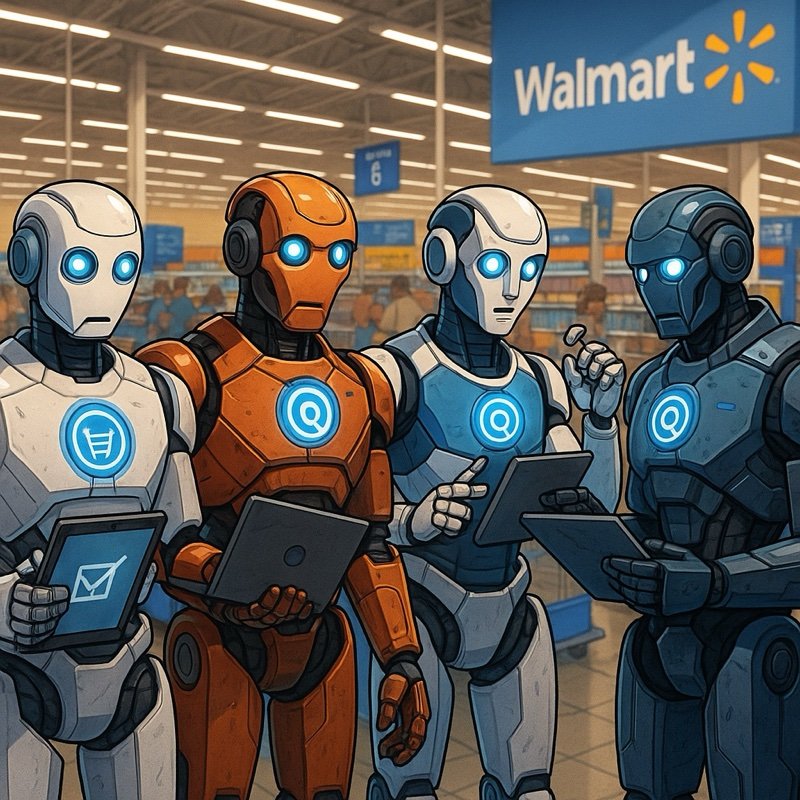
By January 2026, enterprise AI has crossed a structural threshold. What began as copilots augmenting individual productivity is now evolving into operator‑class AI systems that coordinate workflows, allocate resources, and intervene directly in platform operations. For digital platforms serving professional audiences, this shift has profound implications for marketing execution, infrastructure efficiency, and organisational control. AI is no longer assisting work; it is increasingly running parts of the system.
Large technology vendors are formalising this transition. Microsoft is extending agentic AI into operational domains such as IT management, security response, and analytics automation, signalling a move from user‑facing assistance to system‑level control. Amazon Web Services is enabling long‑lived, event‑driven AI agents that monitor infrastructure states and trigger actions across compute, storage, and data services.
On the data and execution layer, Databricks and Snowflake are positioning their platforms as control planes for AI‑driven workloads, where agents reason over data quality, freshness, and downstream impact. At the hardware and systems level, NVIDIA remains critical, though attention is shifting from raw acceleration to predictable scheduling and multi‑tenant inference governance.
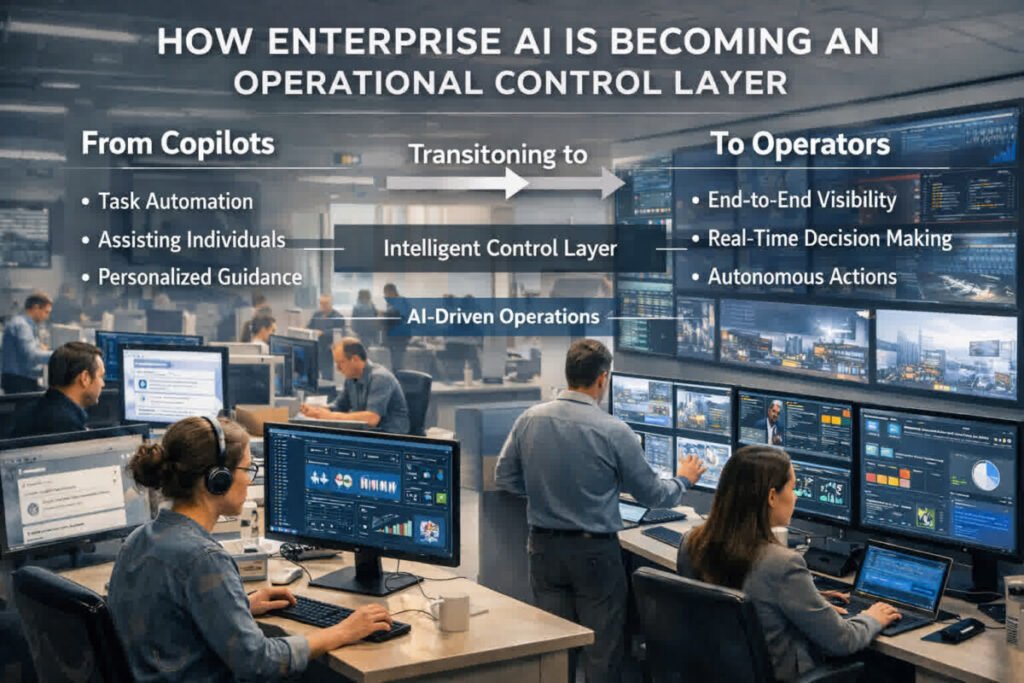
The driver is operational complexity. Professional platforms must continuously balance relevance, trust, cost, and compliance across millions of interactions. Human‑centred workflows struggle to keep pace with the volume and velocity of signals involved. Marketing campaigns, content ranking, fraud detection, and infrastructure scaling all require near‑real‑time coordination.
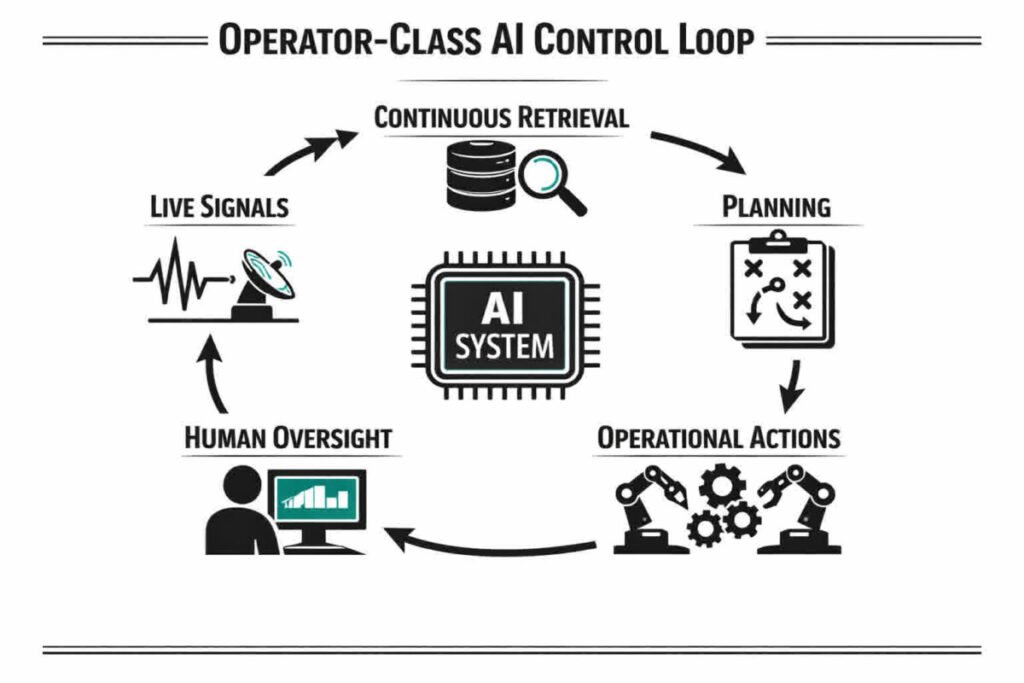
Agentic AI offers a mechanism to close this gap. By combining planning, retrieval, and execution, agents can operate as autonomous operators within defined boundaries. Retrieval‑augmented generation ensures decisions are grounded in enterprise data rather than probabilistic recall. For leaders, the strategic question is how much operational authority to delegate to AI, and under what controls.
Analysis of the shift
Three technical shifts characterise this phase.
- AI operators are becoming stateful and persistent. Unlike episodic copilots, operator‑class agents maintain memory, monitor system states, and act continuously. They reason over streams of events rather than isolated prompts, making them suitable for operations, marketing optimisation, and platform governance.
- RAG is being integrated into control loops. Retrieval is no longer a preparatory step but an ongoing mechanism. Agents continuously refresh context from logs, metrics, policies, and historical outcomes before acting. This is essential where decisions affect revenue allocation or professional visibility.
- Infrastructure orchestration is becoming AI‑mediated. Scheduling inference, routing workloads, and balancing cost against latency are increasingly delegated to agents. For large platforms, AI now optimises AI, creating recursive efficiency gains but also new control challenges.
Pros and Cons
Criticism centres on over‑delegation. Persistent AI operators can obscure accountability if decision trails are incomplete or poorly interpreted. There is also concern that organisations may underestimate the cultural impact of allowing machines to intervene directly in operational decisions. These risks are real where governance is superficial.
AI operators enable faster response times, continuous optimisation, and more efficient infrastructure utilisation. Conversely, they increase architectural complexity, demand high‑quality telemetry, and require mature governance practices. The trade‑off reflects a broader reality: operational scale now demands machine‑level coordination.
Five Strategic Takeaways
- Distinguish clearly between copilots and operator‑class AI systems.
- Embed RAG into operational decision loops, not just user interactions.
- Treat AI‑driven infrastructure orchestration as a governance problem, not merely a performance one.
- Invest in observability and replayability for all autonomous actions.
- Align organisational accountability with AI‑mediated operations.








 :
: